
Vinyl Records 101: Speeds, Sizes & Sound Explained
Vinyl Records 101: Speeds, Sizes & Sound Explained
When I first got into vinyl I spent weeks confused by the difference between a 33⅓, 45, and 78 — and nobody gave me a straight answer. This guide is the one I wish I’d had. I cover speeds, disc sizes, groove mechanics, and why a well-pressed record genuinely sounds different from a lossy MP3.
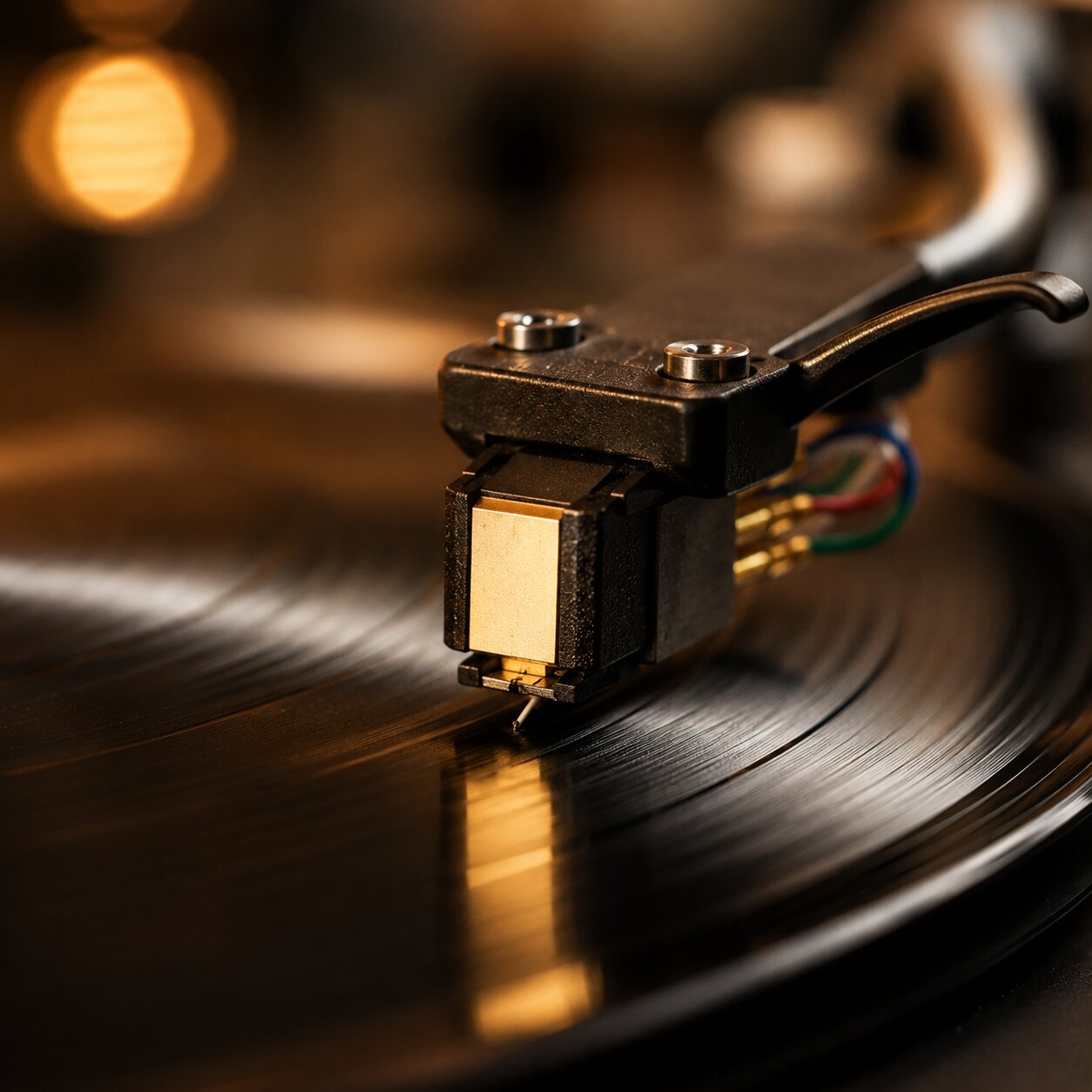
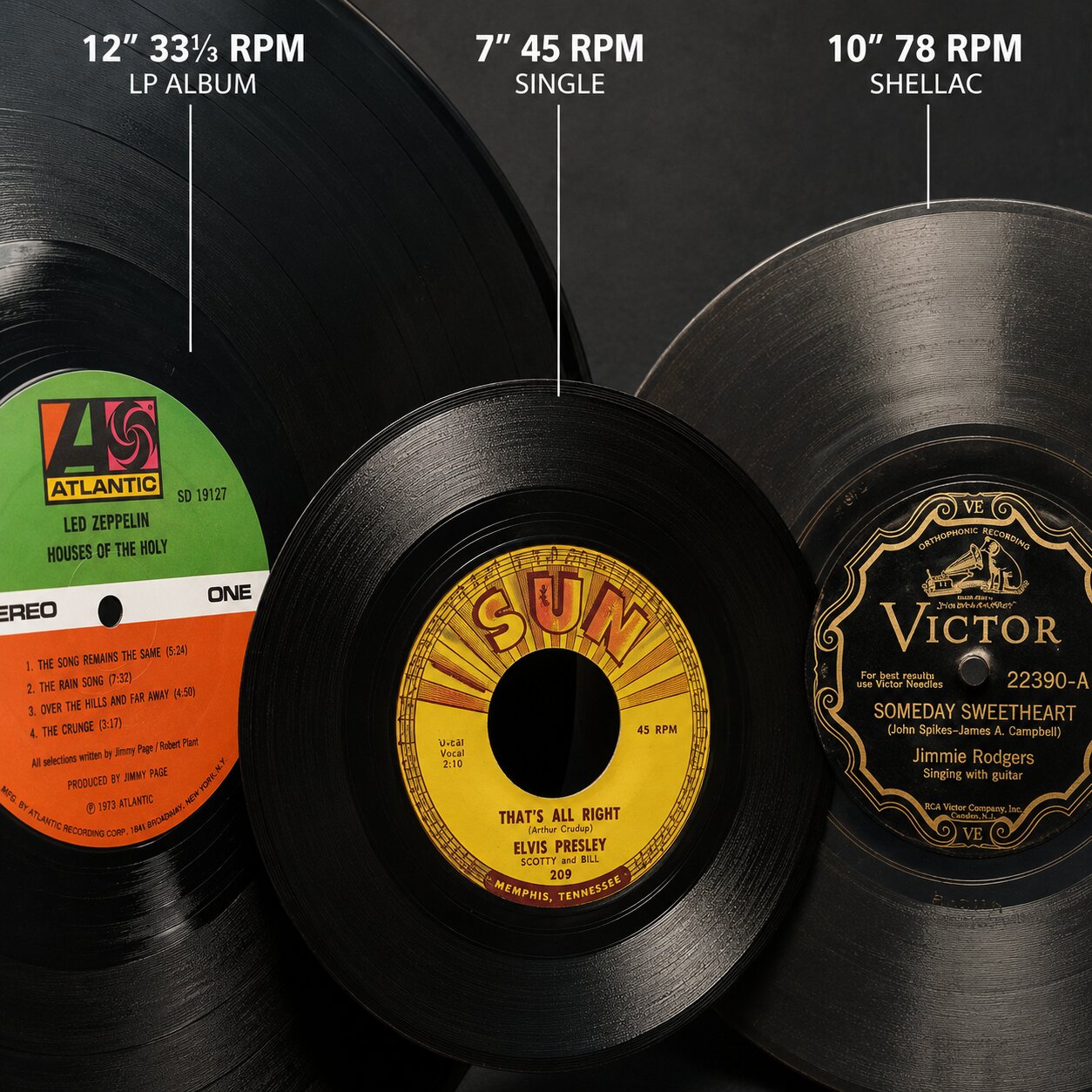
A vinyl record is a physical groove cut into a PVC disc that a stylus reads as it spins, converting physical groove wall shapes into electrical audio signals. Records are manufactured at three standard speeds (33⅓, 45, or 78 RPM), produced in three common disc sizes (7″, 10″, or 12″), and produce sound through a continuous analog process that offers distinct acoustic character compared to digital audio formats.
Going through hundreds of pressings across genres and countries, the “why does this record sound different from that one” question almost always traces back to these physical fundamentals. Understanding how vinyl records are pressed, how speeds and sizes dictate playing time, and how analog playback differs from digital audio provides the foundation for building and enjoying a record collection.
How Vinyl Records Are Made
Vinyl record manufacturing converts an audio recording into a lacquer master, creates negative metal stampers through electroplating, and presses heated PVC pellets under extreme hydraulic pressure.
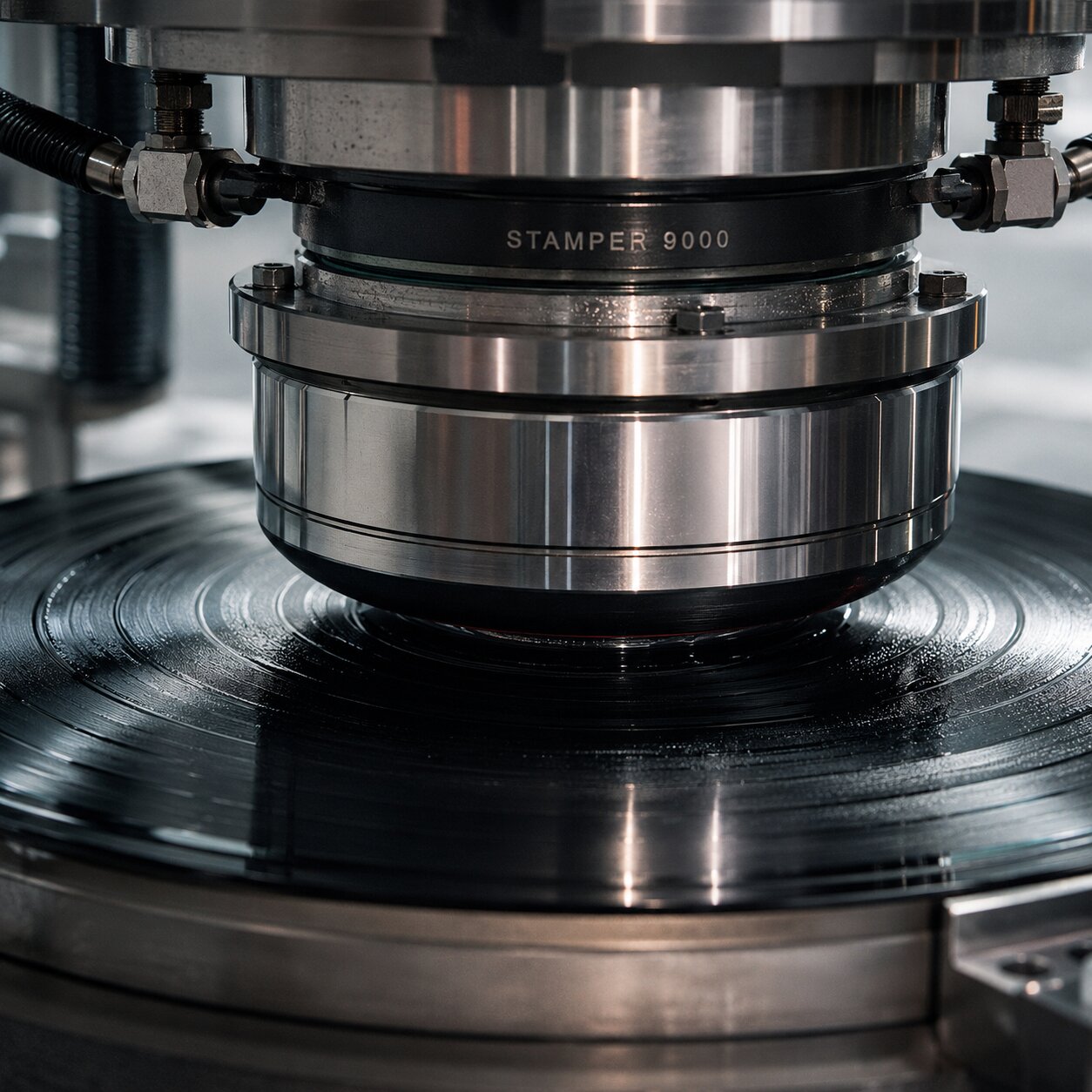
[Master Audio] → [Lathe Cuts Lacquer Disc] → [Electroplating Creates Father/Mother/Stamper] → [Hydraulic Press Stamps Heated PVC Biscuit] → [Finished Vinyl Disc]
Mastering and Lacquer Cutting
Once a recording is mixed, it undergoes specialized vinyl mastering. Vinyl mastering is its own technical discipline, distinct from mastering for CD or digital streaming, because a physical groove has real mechanical limits. Excessive low-frequency bass energy in stereo can cause the stylus to jump out of the groove, while extreme high frequencies can overheat the cutting lathe stylus.
A mastering engineer cuts the audio signal onto a lacquer—a flat aluminum disc coated in smooth nitrocellulose enamel—using a precision cutting lathe. The lathe’s sapphire cutting stylus vibrates in response to the audio signal, carving a continuous spiral groove whose left and right walls contain the mechanical waveform of the music. This lacquer represents the master copy from which all production pressings originate.
Electroplating and Stamper Creation
Because the soft lacquer disc is too delicate to press plastic directly, it undergoes electroplating. The lacquer is sprayed with liquid silver and submerged in a nickel chemical bath. An electric current deposits a nickel layer over the lacquer, creating a negative metal impression called a father.
From the negative father plate, a positive metal copy called a mother is electroplated. From the mother, multiple negative metal stampers are produced. Stampers are the durable metal plates mounted inside hydraulic pressing machines to stamp thousands of commercial records.
Pressing the Final Record
At the pressing plant, high-pressure steam heats a pre-measured puck of polyvinyl chloride (PVC) pellets—known as a biscuit—to roughly 300°F (150°C). The biscuit is placed between top and bottom paper center labels inside the press.
Hydraulic rams squeeze the metal stampers against the heated biscuit under 100 tons of pressure, stamping audio grooves simultaneously into both Side A and Side B. Cold water cools the press, solidifying the vinyl disc in seconds. Excess edge vinyl (flash) is trimmed away, and the finished record is stacked to cool.
Manufacturing flaws like worn stampers, contaminated PVC, or improper cooling introduce defects such as surface noise, non-fill (incomplete groove formation), or edge warps.
Record Speeds Explained (33, 45, 78 RPM)
Record speeds dictate how fast the turntable platter rotates in revolutions per minute, trading off total playing time against audio fidelity.
| Record Speed | Common Disc Size | Typical Format Use | Average Playing Time (Per Side) | Audio Fidelity Characteristics |
|---|---|---|---|---|
| 33⅓ RPM | 12-inch LP | Full-length albums | 20 – 25 minutes | Standard album fidelity; narrower groove spacing. |
| 45 RPM | 7-inch / 12-inch | Singles, EPs, Audiophile LPs | 4 – 15 minutes | Superior high-frequency detail and dynamic punch. |
| 78 RPM | 10-inch / 12-inch | Pre-1950s releases (Shellac) | 3 – 5 minutes | Coarse grooves; requires dedicated 78 stylus. |
Why 33⅓ Became the Album Standard
Introduced by Columbia Records in 1948, the 33⅓ RPM long-playing (LP) format became the album standard because it allowed up to 25 minutes of music per side. Spinning at a slower rotational speed packs more musical material into a smaller disc area, establishing an engineering compromise between continuous playing time and high-frequency resolution.
When You’ll Still Encounter 45s and 78s
Because 45 RPM records spin faster, more physical vinyl surface passes beneath the stylus tip every second. This wider groove spacing improves transient detail, expands dynamic headroom, and reduces inner-groove distortion. While 7-inch singles use 45 RPM for short tracks, premium 12-inch audiophile reissues are frequently cut at 45 RPM across two LPs to maximize sound quality.
78 RPM records predate modern vinyl. Manufactured from brittle shellac compounds rather than flexible PVC, 78s feature wider grooves that require a specialized 3.0 mil 78 stylus. Playing a 78 RPM shellac record with a modern micro-groove stylus will damage both the needle and the record.
Record Sizes Explained
Vinyl record sizes correspond directly to playback duration, format conventions, and historical release standards.
| Disc Diameter | Common Rotation Speed | Primary Format Title | Typical Track Capacity |
|---|---|---|---|
| 12-inch (12″) | 33⅓ or 45 RPM | Long-Playing Album (LP) / 12″ Single | 8 to 12 tracks per album (4-6 per side) |
| 7-inch (7″) | 45 RPM | 45 Single / Extended Play (EP) | 1 to 2 tracks per side |
| 10-inch (10″) | 33⅓ or 45 RPM | EP / Vintage 1950s LP / Jazz Reissue | 2 to 4 tracks per side |
12″ LPs
The 12-inch disc is the universal standard for full-length vinyl albums. Its large physical surface area accommodates high-fidelity 33⅓ RPM album masterings and large 12×12-inch artwork packaging.
7″ Singles
Introduced by RCA Victor in 1949, 7-inch 45 singles featured a single jukebox-friendly track per side. Original 7-inch singles often feature large 1.5-inch center spindle holes requiring a plastic 45 spindle adapter insert.
10″ Records (Less Common, Where You’ll See Them)
10-inch records occupied the primary album spot during the early 1950s before 12-inch discs took over. Today, 10-inch records are pressed for special Record Store Day releases, indie EPs, and historical jazz reissues.
Analog vs. Digital Sound Explained
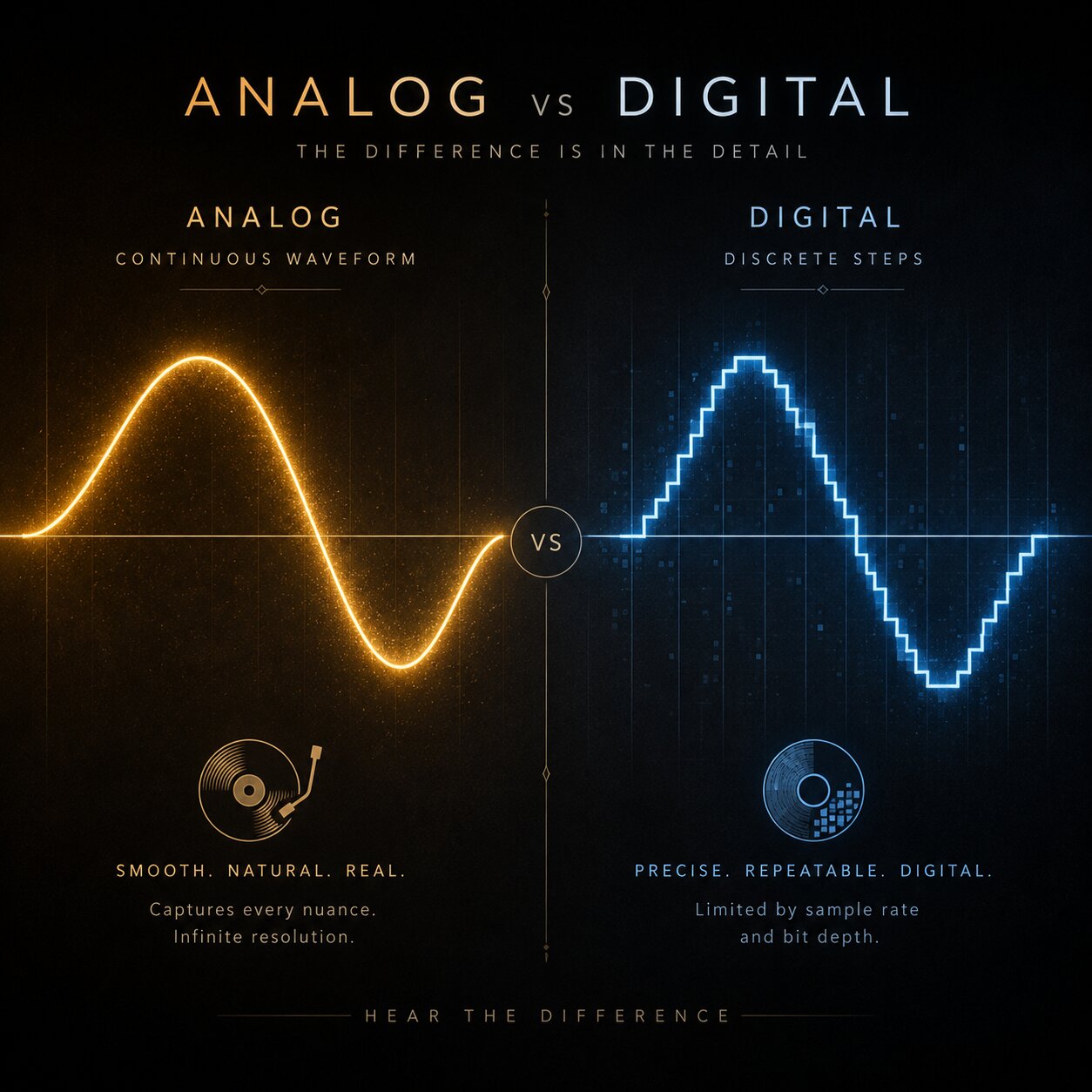
Analog vinyl playback provides a continuous physical acoustic waveform, whereas digital audio samples sound into discrete numerical data steps.
| Acoustic Parameter | Vinyl Analog Playback | High-Resolution Digital Audio |
|---|---|---|
| Signal Waveform | Continuous physical mechanical wave. | Sampled numerical data points (e.g., 24-bit/96kHz). |
| Dynamic Range | 60 dB to 70 dB (groove limited). | 96 dB (CD) to 144 dB (24-bit). |
| Noise Floor | Mechanical surface hiss and rumble (-60 dB). | Silent background (-100 dB+). |
| Frequency Response | Soft mechanical high-frequency roll-off. | Flat, linear response from 20Hz to 20,000Hz+. |
| Harmonic Character | Gentle even-order harmonic distortion (“warmth”). | Precise, transparent, uncolored reproduction. |
What “Warmth” Actually Means, Technically
The characteristic “warmth” associated with vinyl playback has a clear physical basis:
- Harmonic Distortion: Mechanical tracking friction between stylus and groove introduces subtle even-order harmonic distortion that human hearing interprets as smooth, pleasing, and musical.
- High-Frequency Roll-Off: Mechanical cartridge compliance gently softens harsh ultra-high frequencies.
- Uncompressed Mastering: Because physical grooves cannot handle extreme digital volume clipping, vinyl masters preserve natural dynamic range.
Where Vinyl Loses to Digital (Noise Floor, Dynamic Range)
Digital audio outperforms vinyl in objective technical measurements. Digital formats provide lower noise floor, wider dynamic range, superior channel separation, and zero pitch wavering. Vinyl involves physical trade-offs—including background surface noise, inner-groove tracking limitations, and potential warp issues.
For a full breakdown on whether vinyl sounds better than digital, read our guide on does vinyl actually sound better? myths and facts.
Why Vinyl Is Having a Revival
Vinyl’s global resurgence is driven by factors beyond audio specs alone:
- Physical Ownership: Owning tangible vinyl albums with full-sized 12″ jacket artwork provides an authentic sense of physical ownership in an era of digital streaming subscriptions.
- Intentional Listening Ritual: Selecting an album, placing it on the platter, and sitting through a full side encourages focused, active musical appreciation.
- Tactile Collectibility: Colored vinyl variants, gatefold jackets, and detailed liner notes turn records into cherished display items.
To select equipment for playing your record collection, consult our first turntable guide and our turntable setup and calibration guide.
Frequently Asked Questions

Chris Pitcher
Independent vinyl collector helping music lovers discover records worth owning through reviews, recommendations and buying guides.