
Vinyl Cartridges & Styli: The Real Collector’s Alignment Guide
Vinyl Cartridges & Styli: The Real Collector’s Alignment Guide
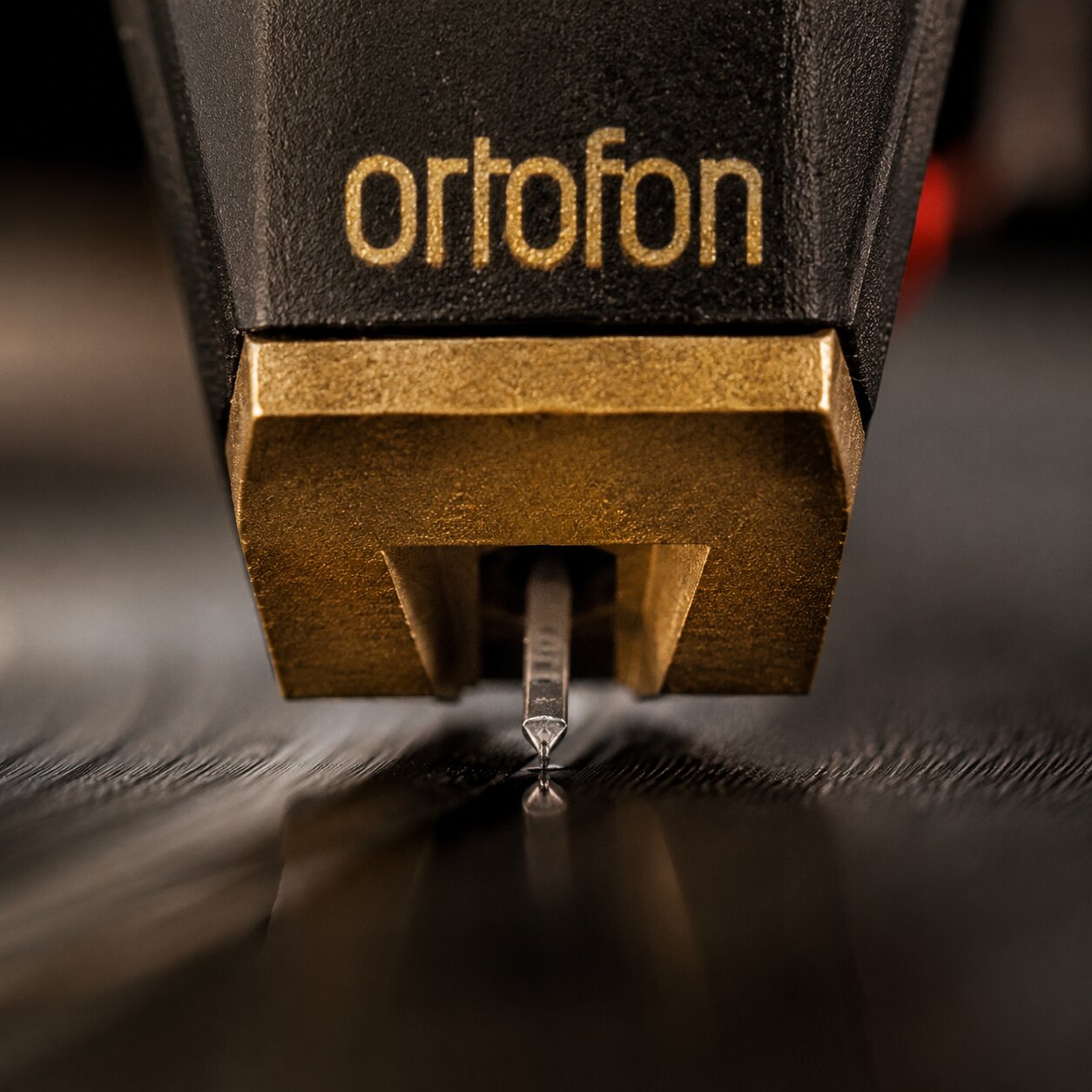
Cartridges are the part of a turntable most people upgrade first and understand least. I spent a solid month reading about MM vs MC, stylus profiles, and cantilever materials before I finally made sense of it. This guide cuts through the noise — practical comparisons, real listening differences, and what actually matters for a home setup.
A phono cartridge converts the mechanical vibrations of a stylus riding in vinyl grooves into an electrical audio signal. Choosing between Moving Magnet (MM) and Moving Coil (MC) designs, selecting the right stylus shape (conical, elliptical, or microline), and replacing worn styli before 1,000 playing hours ensures maximum detail retrieval and protects vinyl records from groove damage.
No single component swap changes the voice of a turntable more dramatically than upgrading the cartridge and stylus. While the turntable plinth provides a stable platform, the cartridge is the actual electromechanical engine translating physical grooves into sound. Here is everything you need to know about cartridge types, stylus profiles, replacement schedules, and top upgrade options across every budget.
MM vs. MC Cartridges Explained
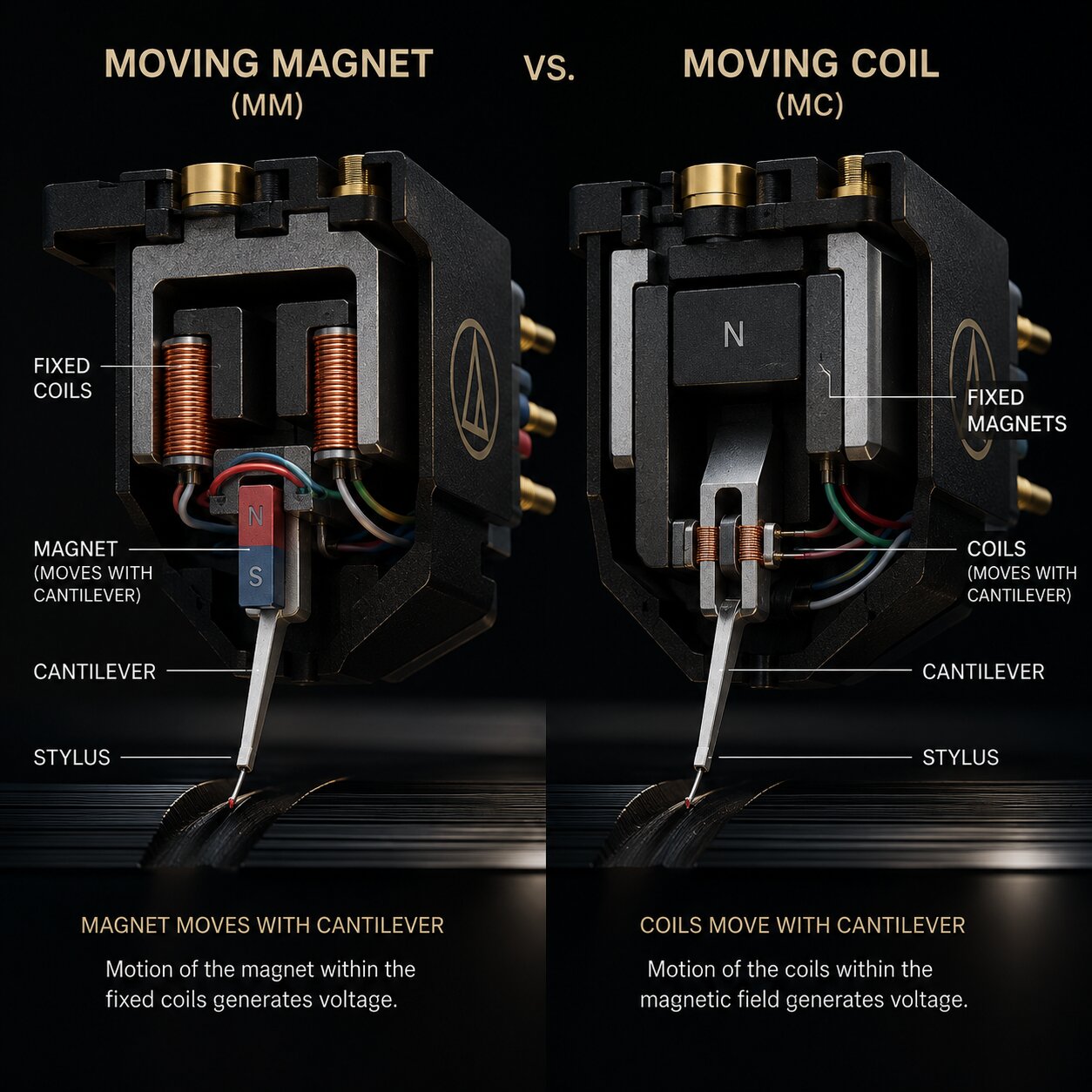
Moving Magnet and Moving Coil cartridges differ in internal generator construction, output voltage levels, and preamp gain requirements.
| Feature / Specification | Moving Magnet (MM) Cartridges | Moving Coil (MC) Cartridges | Moving Iron (MI) Cartridges |
|---|---|---|---|
| Generator Mechanism | Magnets attached to cantilever move inside fixed copper coils. | Coils attached to cantilever move inside fixed magnetic fields. | Iron alloy element moves between fixed magnets and coils. |
| Tip Effective Mass | Higher mass due to attached magnet weight. | Lowest mass due to miniature wire coil mounting. | Medium-low mass; lighter than MM, heavier than MC. |
| Signal Output Voltage | High output (3.0 mV – 6.0 mV). | Low output (0.2 mV – 0.5 mV) for low-output MC. | High output (2.5 mV – 5.0 mV) or low output. |
| Preamp Compatibility | Standard phono inputs (40 dB gain). | Specialized MC phono preamps (60–70 dB gain). | Standard MM phono inputs (40 dB gain). |
| Stylus Replacement | User-replaceable stylus assemblies. | Factory re-tipping or cartridge trade-in required. | User-replaceable or factory service depending on brand. |
| Sonic Character | Punchy, warm, robust bass and strong output. | Micro-detailed, fast transients, wide soundstage. | Rich mid-range warmth, smooth treble, liquid vocals. |
| Average Price Range | $40 – $500 | $300 – $5,000+ | $100 – $3,000+ |
Sound Character Differences
Moving Magnet (MM) cartridges feature tiny magnets mounted at the rear of the cantilever that vibrate inside fixed coils of wire. Because magnets carry higher physical weight, MM cantilevers have higher moving mass. This produces a punchy, warm sonic presentation with strong bass weight and dynamic drive that suits rock, pop, and electronic music.
Moving Coil (MC) cartridges reverse this design by mounting lightweight wire coils directly onto the cantilever, vibrating near fixed magnets. The dramatic reduction in moving mass allows the stylus to trace intricate high-frequency groove waveforms with incredible speed and agility. MC cartridges excel at reproducing acoustic air, subtle instrumental textures, and complex orchestral passages.
Moving Iron (MI) cartridges (pioneered by brands like Grado and Soundsmith) use a lightweight iron alloy element mounted to the cantilever that moves within a stationary field created by fixed magnets and coils. MI designs combine the low moving mass of MC cartridges with the high electrical output of MM designs.
Compatibility and Preamp Requirements
MM cartridges output a robust 3.0 mV to 6.0 mV signal that connects directly into any standard receiver phono input or basic preamp operating at 40 dB gain. Replacing a worn MM stylus is straightforward: simply pull the plastic stylus housing forward off the cartridge body and snap a new one in place.
Low-output MC cartridges produce a faint 0.2 mV to 0.5 mV signal that requires an advanced phono preamp providing 60 dB to 70 dB of gain, alongside adjustable resistive loading (typically 100 ohms). Additionally, MC styli are permanently glued to the internal generator assembly. When an MC stylus wears out, you must ship the cartridge back to the manufacturer for factory re-tipping or trade it in for a replacement unit.
Stylus Shapes Explained
Spherical / Conical
A conical stylus (also called spherical) features a rounded, ball-like diamond tip with a radius of approximately 0.6 or 0.7 mil. Because of its broad, rounded shape, a conical stylus touches a relatively small center section of the groove wall.
- Pros: Inexpensive to manufacture, forgiving on worn or noisy secondhand records, durable for DJ back-cueing.
- Cons: Struggles to trace tight high-frequency inner grooves, resulting in inner-groove distortion and rolled-off high frequencies.
Elliptical
An elliptical stylus features a dual-radius diamond tip ground with a wider front face and a much narrower side contact radius (typically 0.3 x 0.7 mil or 0.2 x 0.7 mil).
- Pros: Drops deeper into the groove channel, tracing high-frequency waveforms with significantly greater accuracy and reduced sibilance compared to conical tips.
- Variants: Bonded elliptical tips glue a diamond stylus tip onto a metal shank (higher mass), while nude elliptical tips cut the entire stylus from a single solid diamond rod (lower mass, superior clarity).
Line-Contact / Microline
Microline (and related Line-Contact, Shibata, and Fine Line) styli feature complex, multi-faceted diamond cuts designed to mirror the shape of the original lathe cutting head.
- Microline Profile: Features a computer-designed ridge cut that maintains a constant contact radius throughout its lifespan, preserving high-frequency extension even as the diamond wears down.
- Shibata Profile: Originally developed in the 1970s for quadraphonic vinyl, the Shibata cut features a parabolic shape that offers wide vertical contact pressure, extracting delicate ambient spatial cues.
- Fine Line / Gyger: Advanced European line-contact profiles designed to minimize tracking error while maintaining low effective tip mass.
- Pros: Features a tall, ultra-narrow vertical contact profile that distributes tracking pressure over a much larger surface area of the groove wall. This extracts hidden micro-detail, eliminates inner-groove distortion almost entirely, and extends vinyl life.
- Cons: Requires meticulous cartridge calibration. Improper azimuth or vertical tracking angle alignment will cause harsh mistracking. For calibration alignment instructions, read our turntable setup and calibration guide.
When to Replace a Stylus
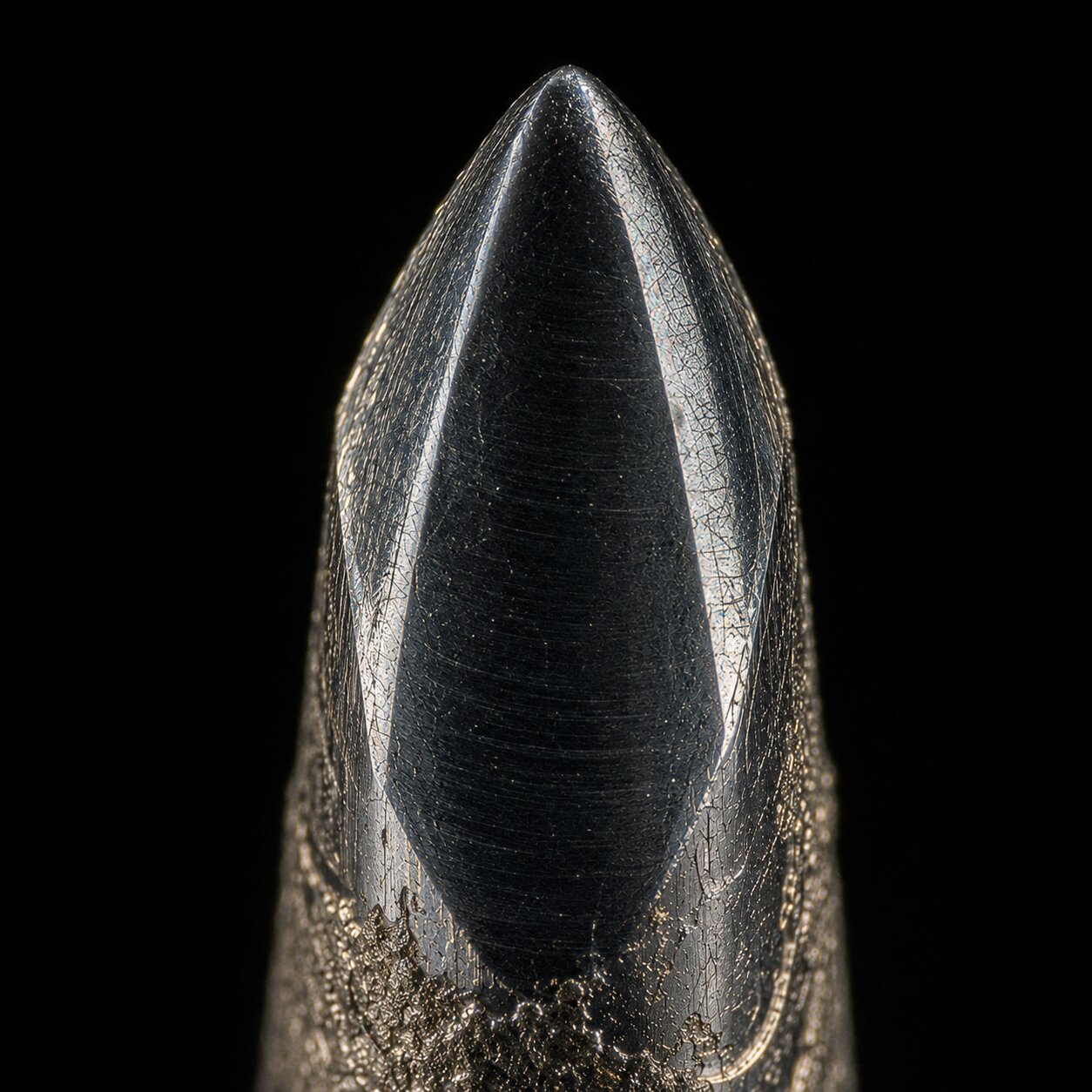
Playing records with a worn or chipped diamond stylus permanently carves away delicate groove details, causing irreversible surface noise and high-frequency dullness.
Signs of Wear
You should inspect and test your stylus immediately if you observe any of the following sonic or visual warning signs:
- Persistent sibilance and distortion: Vocal “S” and “T” sounds begin to smear, buzz, or crackle, particularly on the inner tracks closest to the record label.
- Dull, muffled high frequencies: Cymbals, snare snaps, and acoustic guitar plucks lose their sharp attack and sound recessed.
- Channel imbalance or skipping: Audio pulls noticeably toward the left or right speaker, or the tonearm skips across pristine record surfaces.
- Visual tip deformation: Under a 30x grading loupe or stylus microscope, the diamond tip displays flat, reflective wear facets or chipped edges instead of a clean, symmetrical point.
Typical Stylus Lifespan (Hours Played)
All diamond styli wear down over time due to continuous mechanical friction against vinyl groove walls. Replace your stylus according to these industry playing hour thresholds:
| Stylus Profile Type | Diamond Tip Construction | Estimated Useful Lifespan |
|---|---|---|
| Conical / Spherical | Bonded Diamond Tip | 300 – 500 playing hours |
| Bonded Elliptical | Bonded Diamond on Shank | 500 – 800 playing hours |
| Nude Elliptical | Solid Nude Diamond Rod | 800 – 1,000 playing hours |
| Microline / Shibata | Advanced Line-Contact Cut | 1,000 – 1,500 playing hours |
If you play two albums per day (roughly 1.5 hours of playback time), a standard elliptical stylus requires replacement after approximately 18 months of regular use. To minimize stylus abrasion, clean records thoroughly before every play using our recommended techniques in our record cleaning and storage guide.
For daily stylus cleaning, use a dedicated dry stylus brush or a polymer gel dipping pad like the Hudson Hi-Fi Stylus Cleaning Gel ($12, safely removes micro-dust without pulling cantilever joints, though requiring occasional rinsing with cold water).
Best Cartridge Upgrades by Budget
Upgrading your phono cartridge provides the most cost-effective path to expanding soundstage width, improving bass punch, and eliminating inner-groove distortion.
Under $100
- Audio-Technica AT-VM95E ($69): The undisputed budget king of Moving Magnet cartridges. Features a durable bonded elliptical stylus mounted on an aluminum cantilever, delivering balanced tone, solid tracking ability, and a modular body that allows easy snap-on stylus upgrades up to Microline profiles. Trade-off: The plastic body casing feels lightweight and lacks the ultimate mid-bass punch of higher-tier cartridges.
- Ortofon 2M Red ($99): An iconic entry-level MM cartridge featuring an elliptical diamond tip and split pole pins. Produces an energetic, open soundstage with pronounced high-frequency detail and strong output. Trade-off: Its bright treble character can sound slightly analytical or unforgiving on poorly recorded, sibilant pressings.
$100–300
- Nagaoka MP-110 ($139): A legendary Moving Permalloy (MM family) cartridge from Japan that delivers rich, organic mid-range warmth, deep bass response, and exceptionally low surface noise on used vinyl. Trade-off: Uses a bonded elliptical stylus cut that trades a bit of extreme top-end air for musical smoothness.
- Audio-Technica AT-VM95E ($119): Features a solid nude elliptical diamond stylus mounted on the VM95 body platform. Delivers noticeable improvements in channel separation, transient speed, and inner-groove tracking over bonded alternatives. Trade-off: Maintains a neutral, uncolored frequency presentation that may lack mid-range lushness on lean systems.
- Ortofon 2M Blue ($189): A massive step up from the 2M Red, swapping in a nude elliptical diamond stylus while using the same cartridge generator body. Resolves subtle acoustic details, cleans up sibilance, and tightens bass dynamics. Trade-off: The nude diamond tip easily reveals surface noise and dust clicks on dirty, unwashed records.
- Sumiko Rainier → ($149): An American-designed MM cartridge offering a sweet, smooth mid-range presentation with punchy lower bass weight. Trade-off: Slightly less top-end sparkle than Ortofon or Audio-Technica models.
$300+
- Audio-Technica AT-VM95ML ($169): The absolute best value in high-fidelity vinyl playback. Combines a genuine Microline diamond stylus with a dual-magnet MM body, completely eliminating inner-groove distortion and lasting up to 1,000 hours. Trade-off: Meticulous tonearm alignment (alignment, VTA, azimuth) is mandatory to prevent tracking harshness.
- Nagaoka MP-200 ($449): Combines a boron cantilever with a nude elliptical stylus tip inside a Moving Iron generator. Offers breathtaking vocal realism, liquid mid-range resolution, and punchy acoustic bass. Trade-off: Higher price tag for a non-line-contact stylus profile.
- Denon DL-103 ($349): A legendary low-output Moving Coil cartridge in continuous production since 1962\. Delivers stunning dynamic slam, authoritative bass, and effortless musical realism that rivals cartridges costing triple its price. Trade-off: Requires a high-mass tonearm and a specialized MC phono preamp providing at least 60 dB of clean gain. To configure matching amplification, read our vinyl signal chain guide.
- Hana EL ($475): An exquisite entry-level low-output Moving Coil cartridge featuring a synthetic sapphire cantilever and a nude elliptical stylus. Retrieves breathtaking soundstage depth, silky smooth treble, and delicate acoustic nuance. Trade-off: Requires a high-quality MC phono preamp and carries a high re-tipping replacement cost when worn.
Frequently Asked Questions

Chris Pitcher
Independent vinyl collector helping music lovers discover records worth owning through reviews, recommendations and buying guides.