Building & Managing a Record Collection You Love
Building & Managing a Record Collection You Love
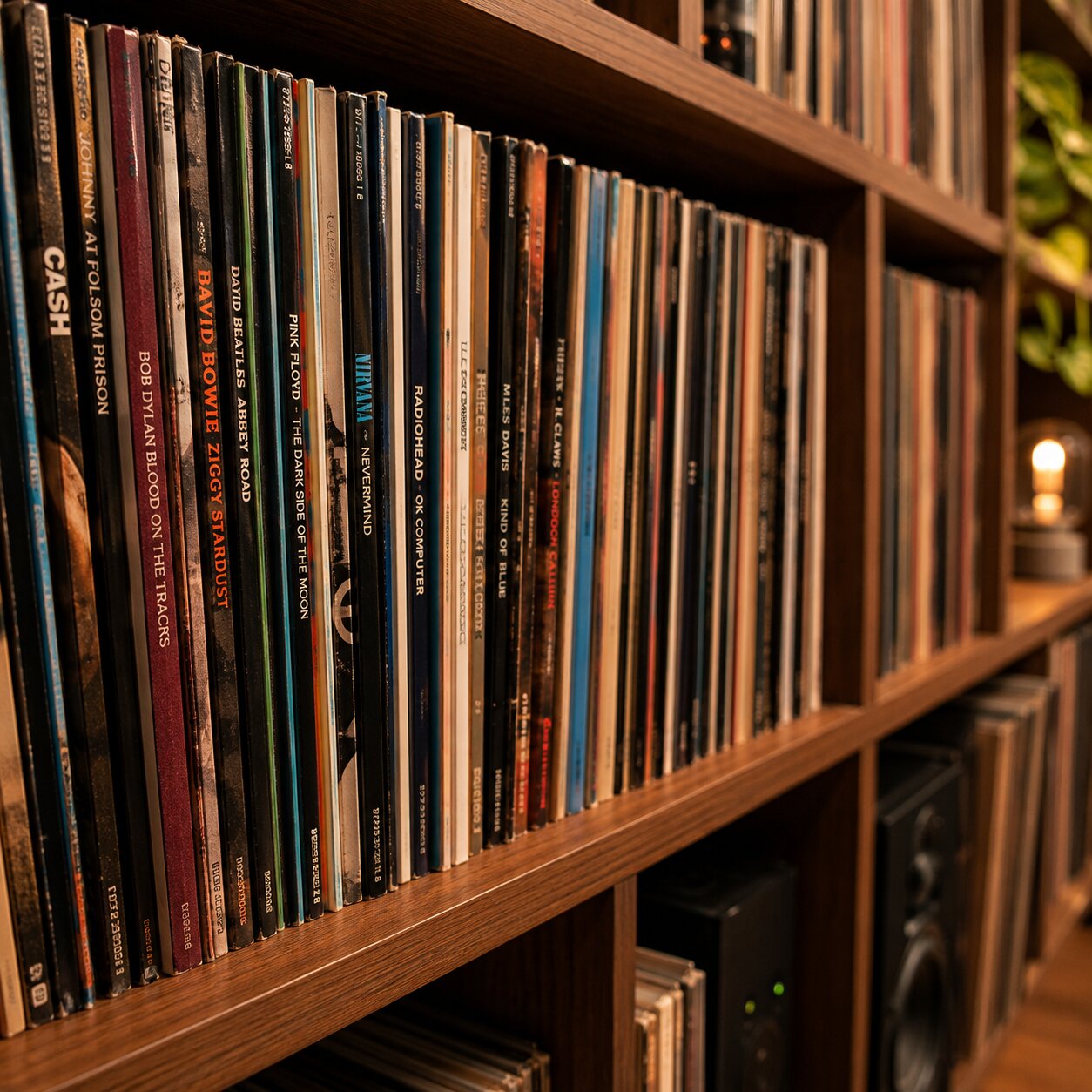
At around 300 records I realised I needed a system. Without one I was buying duplicates, losing track of condition notes, and stacking records in ways that were bowing sleeves. This guide covers how I use Discogs to catalogue everything, how I shelve by genre and weight, and how I protect jacket art.
Building and managing a record collection requires collecting with intentional curation goals, cataloging albums digitally using Discogs, organizing physical shelves systematically, adhering to budget limits, and securing specialized collectibles insurance. Structured collection management preserves vinyl condition, prevents duplicate purchases, and protects your financial investment over time.
Building a collection is a marathon, not a sprint. It is easy to get caught up in the excitement of buying every cheap record in sight, only to end up with shelves full of clutter you rarely listen to. Intentional collection management ensures every record on your shelf serves a purpose. Here is how to curate, catalog, organize, budget, and insure your record collection effectively.
How to Start a Collection With Intent
Starting a record collection with intent means defining clear personal curation principles before spending money:
- Focus on albums you love end-to-end: Avoid buying albums for a single hit single. Vinyl requires physical interaction (side-flipping every 20 minutes), making it best suited for cohesive, full-length listening experiences.
- Set specific collecting goals: Decide whether you are building a broad genre survey (e.g., 1960s jazz, 1970s punk, 1990s hip-hop), completing a favorite artist’s discography, or hunting down specific original pressings.
- Avoid common collector traps: Beware of impulse buying driven by limited-edition Record Store Day hype, multi-disc box sets where you only enjoy one side, or monthly vinyl subscription clubs that ship generic colored reissues you wouldn’t otherwise purchase.
- Prioritize quality over sheer volume: A curated shelf of 100 clean, well-cared-for VG+ or Near Mint pressings provides significantly more musical enjoyment and value retention than 1,000 worn, scratched thrift store bargain bin records.
Organizing and Cataloging Your Collection
Digital cataloging and systematic physical organization eliminate duplicate purchases and make browsing your collection effortless.
Using Discogs as a Collection Database
The Discogs database is the gold standard digital cataloging tool for record collectors:
- Barcode Scanning: Use the Discogs mobile app camera to scan album barcodes, instantly pulling up release entries and adding them to your digital collection.
- Matrix Matching for Pre-Barcode Vinyl: For vintage records lacking barcodes, search using the matrix numbers etched into the dead wax to catalog your exact pressing variant.
- Custom Folders and Notes: Organize your Discogs digital collection into custom sub-folders (e.g., “To Clean,” “To Sell,” “Listening Station”) and add personal notes regarding condition grades or purchase prices.
- Preventing Duplicate Buys: Accessing your digital catalog on your phone while crate digging at record stores prevents accidentally buying duplicate copies of albums you already own.
- Tracking Valuation: Discogs automatically tracks your total collection valuation (minimum, median, and maximum market values) based on real sales data.
Physical Organization Systems (By Genre, Alphabetical, etc.)
Choosing the right physical organization system depends on your collection size and browsing preferences:
| Organization Method | Primary Browsing Logic | Search Speed / Efficiency | Maintenance Effort | Best Suited For |
|---|---|---|---|---|
| Strict Alphabetical (A–Z) | Ordered by Artist Last Name / Band Name, then chronological. | Fast & precise; instant album retrieval. | Medium; requires shifting albums when adding new vinyl. | Collections over 300 LPs. |
| Categorized by Genre | Grouped by Genre (Jazz, Rock, Soul), then Alphabetical. | Excellent for mood browsing; moderate search speed. | Medium; genre boundaries can feel subjective. | Diverse mid-sized collections (200–800 LPs). |
| Chronological Release Year | Ordered strictly by original album release year. | Slow for specific titles; fascinating historical perspective. | High; requires memorizing release years. | Focused historical or artist discography collections. |
| Discogs Index Number | Ordered numerically matching Discogs entry placement. | Instant precise lookup via app; zero thematic cohesion. | Low; new additions go directly to the end of the shelf. | Large archival collections (1,000+ LPs). |
Physical Storage Essentials & Divider Cards: Use heavy plastic alphabet or genre divider cards with raised tab lettering to navigate shelf sections quickly. Always store records 100% vertically on heavy-duty shelving. For detailed storage specifications and heavy-duty cube recommendations like the IKEA Kallax 2×2 / 4×4 Shelving Unit ($45–$119) or stackable Snapware Heavy Duty Vinyl Storage Crates ($24), review our record cleaning and storage guide.
Collecting on a Budget
Building a deep record collection does not require spending thousands of dollars if you shop strategically.
- Dig through record store bargain bins: Local shop bargain bins ($3 to $5 crates) often hide excellent playable music from lesser-known 1970s and 1980s artists.
- Target garage sales and estate sales: Arrive early at estate sales or flea markets with a portable flashlight and a digital stylus scale. Estate sales often liquidate vintage collections at flat $2 to $5 prices.
- Target early reissues over first pressings: If an original first pressing costs $150, look for a 1970s or 1980s reissue cut from original master tapes for $15 to $20. You get 95% of the audio quality at a fraction of the cost. For guide details on identifying reissues, see our pressing identification guide.
- Buy VG condition records for loud genres: While acoustic jazz and classical demand silent VG+ or Near Mint vinyl, loud 1970s hard rock and punk albums in VG condition often play through surface noise without noticeable distraction.
- Trade in duplicate copies: Sell or trade unplayed duplicates and upgraded copies back to local record stores for store credit. For valuation and selling strategies, read our buying and selling vinyl guide.
Insuring a Valuable Collection
Standard homeowner’s and renter’s insurance policies rarely cover full vinyl collection replacement values without specialized riders.
Homeowner’s/Renter’s Policy vs. Specialty Insurance
Insurance Note: Specialty insurance providers (such as Collectibles Insurance Services or Wax Insurance) offer dedicated policies specifically tailored for physical record collections. Note: Specialty insurance policies are purchased directly through specialized insurance underwriters and cannot be linked via Amazon affiliate links.
To secure coverage for a high-value collection ($5,000+):
1. Export your complete Discogs catalog: Generate a CSV spreadsheet export detailing catalog numbers, release versions, condition notes, and median market valuations.
2. Photograph individual high-value items: Take clear photos of rare individual grails ($100+ albums) showcasing jacket condition, center labels, and dead wax matrix marks.
3. Store digital backups offsite: Save your catalog exports and photos in secure cloud storage or a secondary drive.
4. Obtain a written policy rider or standalone policy: Secure a dedicated collectibles policy specifying agreed-value coverage, ensuring annual policy reviews to account for market appreciation.
Frequently Asked Questions
Chris Pitcher
Independent vinyl collector helping music lovers discover records worth owning through reviews, recommendations and buying guides.